From Invisible to Bold Witness
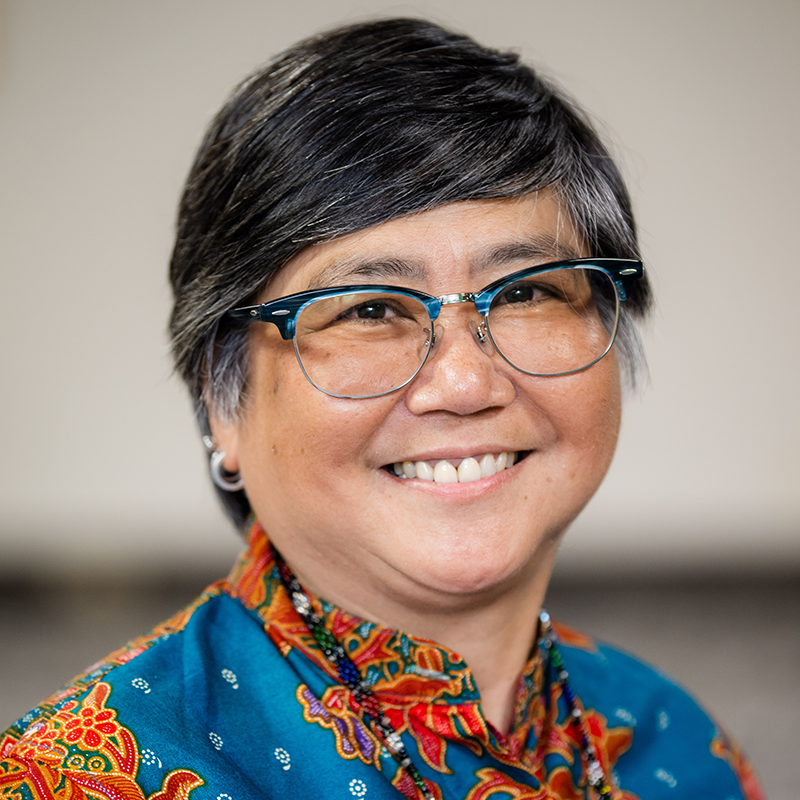
By The Rev. Teresita “Tita” Valeriano
Asian and Pacific Islander Ministries, Program Director — Ministries of Diverse Cultures and Communities, ELCA
When I was living in Chicago, I found a then-new Asian queer community through a flyer with the title “From Invisible to Invincible.” This was even before the 2009 ELCA Assembly adoption of “Human Sexuality: Gift and Trust” Social Statement, together with its implementing resolutions and a recommendation on Ministry Policies.
As an Asian immigrant, I strongly identified with the title of the flyer. As Asian, we are made invisible, and our stories and gifts overlooked under the disguise of being a model minority, a phrase coined to pit people of color against each other. And though I believe that no one can be invincible, that was the time when I was also on the journey to step away from the shadows of invisibility, as Filipino American, Christian, and queer.
This May, as we observe Asian American, Native Hawaiian and Pacific Islander Heritage Month, I think of how my journey from invisibility has brought me to meet and build relationships with more AANHPI Queer Christians, some of them Lutherans. Even though there are still unresolved challenges about full justice for gender, gender expressions and identities among API Lutherans, I believe that we are not only ready to step out of invisibility, but towards a more holistic ministry of justice as our bold witness. Beyond gender justice, we are committed to its intersection with racial, migrant and refugees’ justice. So to join me this month, I invite you to know we truly are through the following stories and commitments:
- “Queer We Stand and Celebrate: Transpacific Queer Network.” In 2024, 23 Asian Queer Christians gathered, making a safe and courageous space to celebrate our humanity and identity, share our stories, break bread together, and create new visions. I invite you to pray for the following commitment and become an ally.
We commit from an ecumenical (and) Lutheran perspective the need to grow our faith, to network, to keep, and to grow relationships with one another as Asian and Pacific Islander LGBTQIA+ folks on both sides of the Pacific.
We commit to:
- Identify the LGBTQIA+ liberational work already happening in API contexts and create/strengthen connections among existing organizations, API queer theologians, lay leaders, and practitioners.
- Contextualize queer/liberative/affirming theologies, interpretations, liturgies, and ministry practices into multiple API contexts.
- Recognize, resist, and eradicate the harm from various forms of oppression and intersectional injustice, colonial power, and cis-hetero normativity to live fully as communities of the kin-dom* [reign] of God.
- Practice deep solidarity, mutual support, compassion, and communal- and self-care across multiple intersecting differences.
- Identify and form leaders to make safer and braver spaces and to imagine ways to transform the churches and faith-related communities in Asia, the Pacific, North America, and everywhere.
- The API Ministries Office lifts the stories of Japanese-American Lutherans observing their call of “Day of Remembrance”, every February 19th. This year we also observe the 80th anniversary of the Japanese Americans’ release from the internment camp. Three Japanese American Lutherans, Gail Kiyomora, Stacy Kitahata and Rev. Deanna Kim Basset, are sharing their stories in the Living Lutheran on May 5,13 and 29, 2026.
- We also want to focus on the bold witness of our Hmong communities. In May 1976, the largest group of Hmong refugees arrived in the United States. I invite you to include them in the Sundays prayers of the people this month. Here are some themes as we pray with and for our Hmong communities:
- The gifts and valuable contribution of the Hmong community in church and society
- Refugees’ safe journeys, and for the provisions they need along the way
- For refugees to find warm welcome, hospitality, belonging and just immigration policies, especially for those seeking asylum and protection from violence and war
- For refugees’ family reunions
- For strong faith, that they may be able to worship with freedom and strengthen their faith communities