
Earlier this summer, our Interim Executive Director, Roberto Lara Aranda, was invited to preach during an international ecumenical leadership retreat at the Vatican, offering the first ecumenical homily in the program’s history. He went openly as a queer Lutheran and as a leader of Extraordinary Lutheran Ministries, carrying the witness of our community with him into that room.
The sermon that follows takes up one of Jesus’ most demanding commands, to love our enemies, and traces a divine mercy that keeps reaching past the boundaries we are tempted to draw. Drawing on the story of Ahab, the Lutheran conviction that grace is God’s work before it is ours, and his own years of accompaniment alongside immigrant and LGBTQIA+ communities, Roberto invites us to imagine grace as wide as God intends it, and to carry that love into our leadership, our ministries, and our shared life.
We are honored to share it with you.
—
Dear Siblings in Christ,
The Gospel we have just heard contains one of the most demanding commands Jesus ever gives: “Love your enemies and pray for those who persecute you.” (Matthew 5:44)
If we read this passage too quickly, we are tempted to make it smaller. We tell ourselves that Jesus must be speaking about people who irritate us, colleagues with whom we disagree, relatives we find difficult. Surely Jesus means those ordinary tensions that accompany life together.
But the text will not allow us that escape. Jesus is precise. He speaks of enemies. Those who persecute. Those who oppose us. He is calling us to extend love beyond the boundaries that fear, anger, ideology, and even our wounds would naturally draw.
For those of us entrusted with leadership in the Church, this teaching is not an abstract ideal. It is a daily discipline. To lead in a synodal way is to refuse, day after day, to place anyone outside the circle of accompaniment.
The first reading offers a striking example. Elijah is sent to confront King Ahab after the murder of Naboth and the theft of his vineyard. The prophet does not soften the truth. He names the injustice. He names the abuse of power. He speaks God’s judgment plainly.
Yet the story does not end there.
When Ahab hears these words, he tears his clothes, puts on sackcloth, fasts, and humbles himself. Then God says to Elijah, “Have you seen how Ahab has humbled himself before me?” (1 Kings 21:29)
What surprises us is not Elijah’s courage. What surprises us is God’s response.
The God we serve does not draw the line where we would draw it. God’s mercy continually exceeds our calculations.
As a Lutheran, I have always been shaped by the conviction that salvation is God’s work before it is ours. We confess that we are saved by grace through faith, not because of our own achievements or worthiness, but because of the boundless mercy revealed in Jesus Christ. The Lutheran tradition speaks often of a God who never tires of seeking, forgiving, restoring, and reconciling.
I am reminded of a sermon by Bishop Elizabeth Eaton, who recently completed her service as Presiding Bishop of the Evangelical Lutheran Church in America — my church. Reflecting on the breadth of God’s saving work in Christ, she invited us to consider whether we sometimes place limits on a grace that God has not limited. Whenever I have shared that idea with friends, the same questions arise: What about those who have done terrible evil? What about those whose actions seem beyond forgiveness?
And I recognize in those questions something deeply human. We rejoice in God’s mercy for ourselves and for those we love. Yet we often struggle to imagine that same mercy reaching those whom we fear, resent, or condemn.
The story of Ahab reminds us that God’s desire is not exclusion but reconciliation.
This truth has accompanied me throughout my ministry and professional life. I have seen it while accompanying immigrant communities in the United States who have often been treated as strangers or threats by the very societies they enrich. I have seen it while walking alongside LGBTQIA+ Christian ministers whose gifts and vocations have not always been recognized by every part of the church. Again and again, I have learned that the love Jesus commands is not sentimental. It is demanding. It asks us to keep our hearts open precisely where experience teaches us to close them.
And perhaps that is why Psalm 51 remains one of the Church’s most beloved prayers. The psalmist cries out, “Do not cast me away from your presence, and do not take your holy spirit from me” (Psalm 51:11). The psalmist knows that reconciliation begins not with our own efforts but with God’s mercy.
Jesus concludes today’s Gospel with words that have challenged generations of Christians: “Be perfect, therefore, as your heavenly Father is perfect” (Matthew 5:48).
The Greek word translated as “perfect” is teleios (télios). It does not mean flawless. It means complete, whole, brought to its intended fullness. Jesus is inviting us into the fullness of God’s love — a love that extends beyond every boundary we create.
As we gather around the Lord’s table, we come not as people who have perfected that love, but as people who need it. We come as those continually being forgiven, continually being renewed, continually being drawn into a larger communion than we would create for ourselves.
And from that table, Christ sends us back into the world as leaders, companions, bridge-builders, and witnesses to a mercy that is always wider than our hearts.
Que la paz de Cristo, ☩ que sobrepasa todo entendimiento, nos acompañe en este camino, ahora y siempre. Amen.
 ELM is pleased to announce that the 2026 Workin Scholarship for publicly-identified lesbian, gay, bisexual, transgender, and queer Lutheran seminarians and first-year pastors is now accepting applications. This year, up to three grants of $5,000 each will be awarded to the chosen candidates.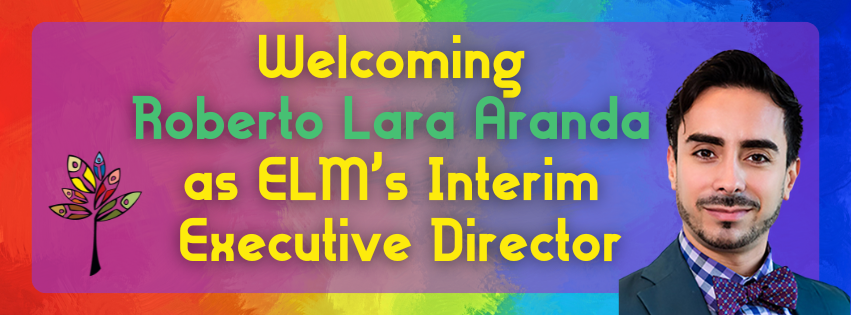
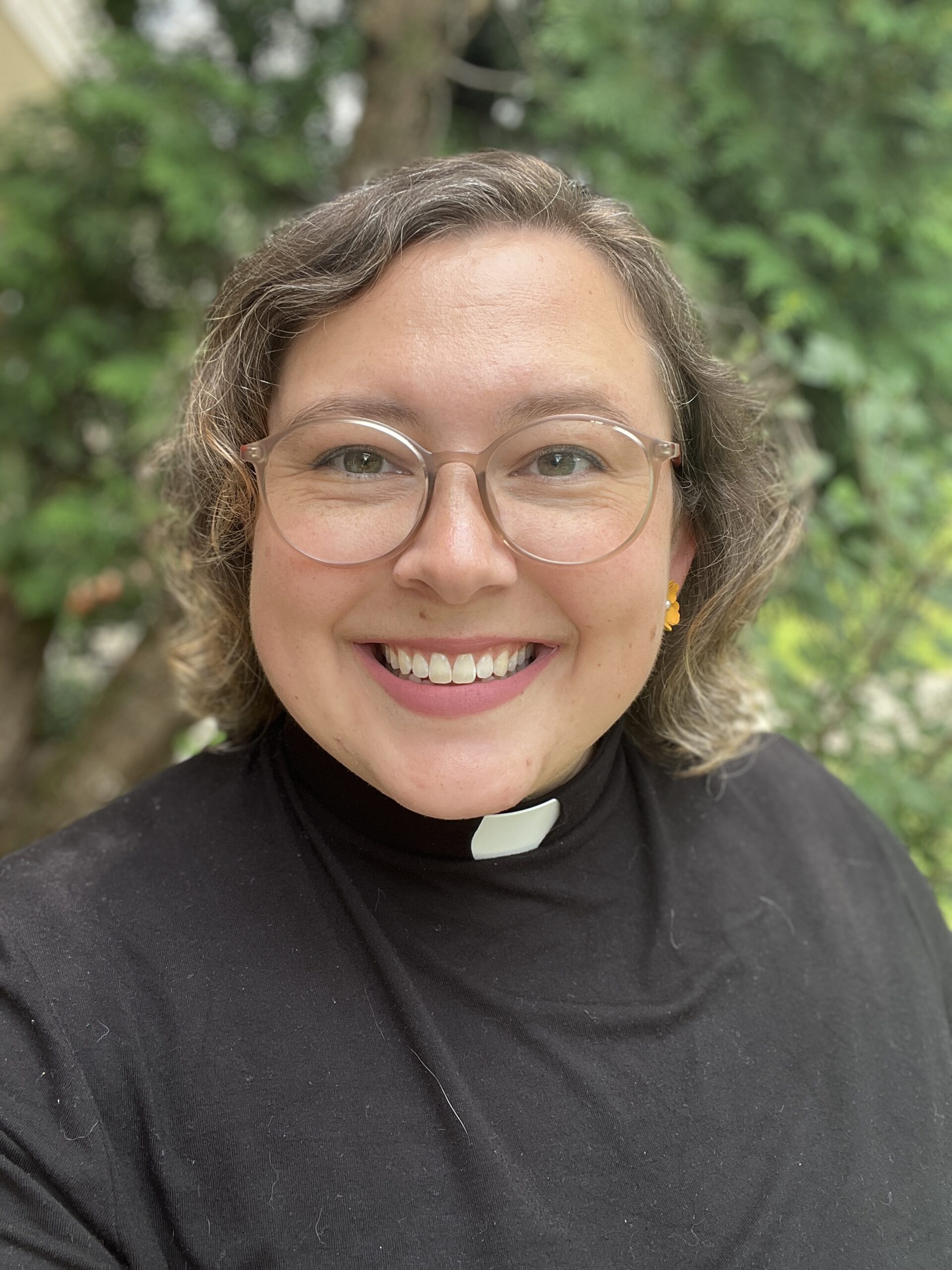 Bio: Mycah McNett(She/Her) is a lifelong Lutheran who hails from both Washingtons: the State and the DC Area. Being a Queer Lutheran is a major part of Mycah’s identity. Mycah is a 2023 graduate of United Lutheran Seminary and is ordained in the ELCA. Mycah holds a Bachelor of Science in Biology from James Madison University, specializing in environmental and evolutionary fields as well as anthropology. After college, Mycah served as a Young Adult in Global Mission through the ELCA in Manchester, UK, and as a lay staff member at a Lutheran Church in Harrisonburg, VA. Currently, Mycah is located just outside Philadelphia, PA with her spouse, Alyssa, and three cats: Clem, Clio, and Minnie.

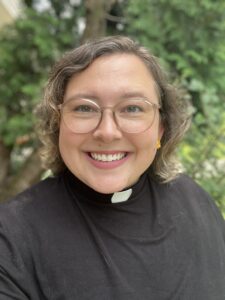 Bio: Mycah McNett
 The Reverend Juan Manuel Arias-Perea (He,Him, Él) serves as the pastor of Good Shepherd Lutheran Church in Weehawken, New Jersey. Originally from Cuba, Rev. Arias-Perea brings a rich blend of academic and pastoral experience to his ministry. He holds a Master of Divinity from the Lutheran School of Theology at Chicago, a Master of Theology from the Mexican Theological Community in Mexico City, and is currently pursuing a Doctor of Ministry at Iliff School of Theology in Denver, Colorado.
 Seminarian Max Del Bosque (he/him) is a queer, bi, transgender, Latinè seminarian at Pacific Lutheran Theological Seminary and candidate for ordination in the ELCA’s Southwest California Synod. Max has an MFA in Studio Art, and is a practicing visual artist and tenured art professor at Los Angeles’s Pierce College. He has taught painting workshops for Yale Divinity School’s Graduate Conference on Religion and Ecology and Harvard Divinity School’s Program for the Evolution of Spirituality, as well as painting workshops for San Francisco Night Ministry, and art workshops for transgender and gender diverse folk out of his studio, Miel de la Tierra Studio. Max’s art explores identity as it relates to gender, culture, and sacred connections to land and place.
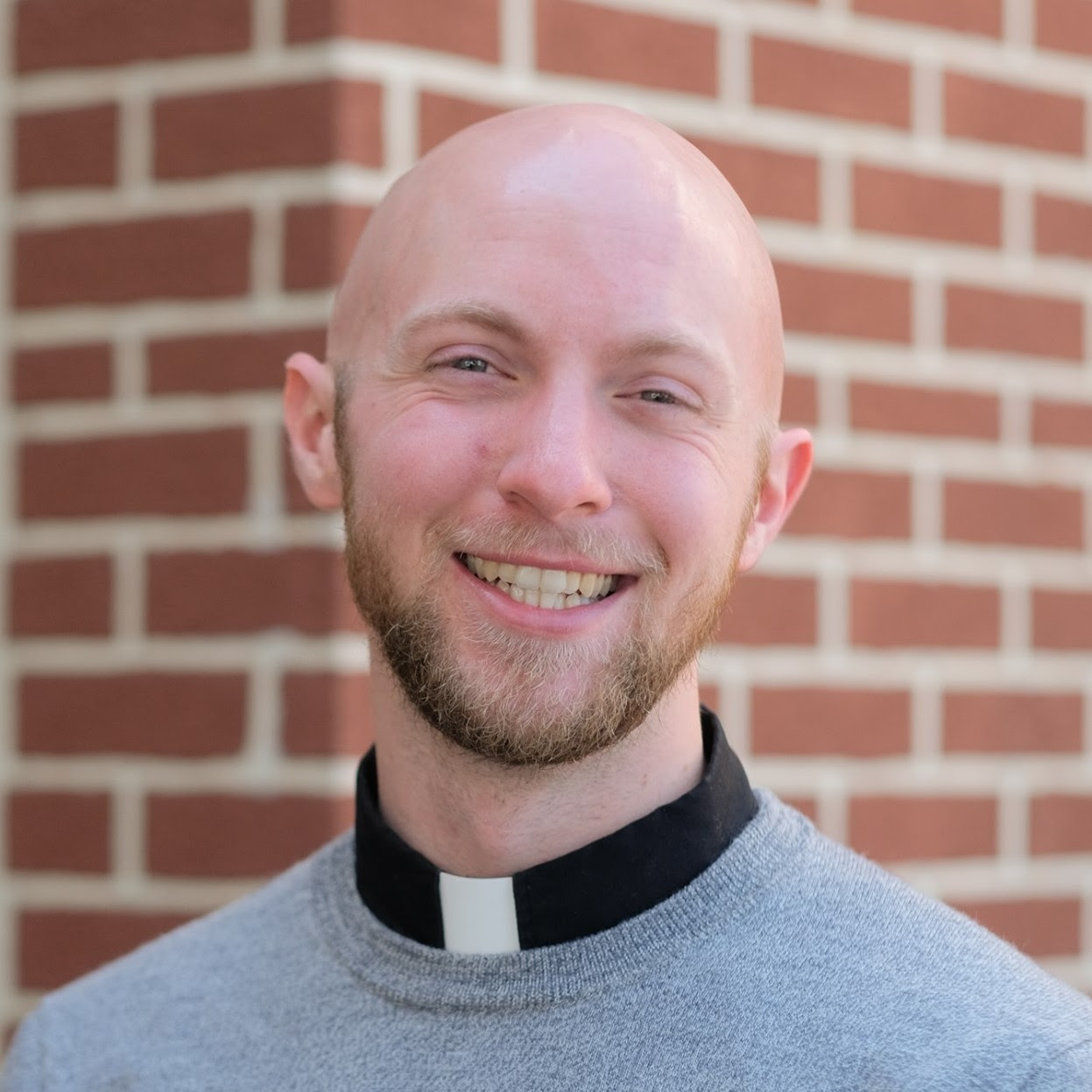 Bio: Anders Nelson (he/they) is the pastor of the Mabel/Henrytown Tri-Point Parish in Mabel, Minnesota where he’s been serving three congregations since December 2024. Their interests in ministry center around inviting communities to tell their own story, including recognizing how their story fits into the larger narrative God is weaving throughout all time and space. In his spare time, you can find Anders playing plenty of board games, singing and dancing on stage and off, and participating in way too many Dungeons and Dragons campaigns.
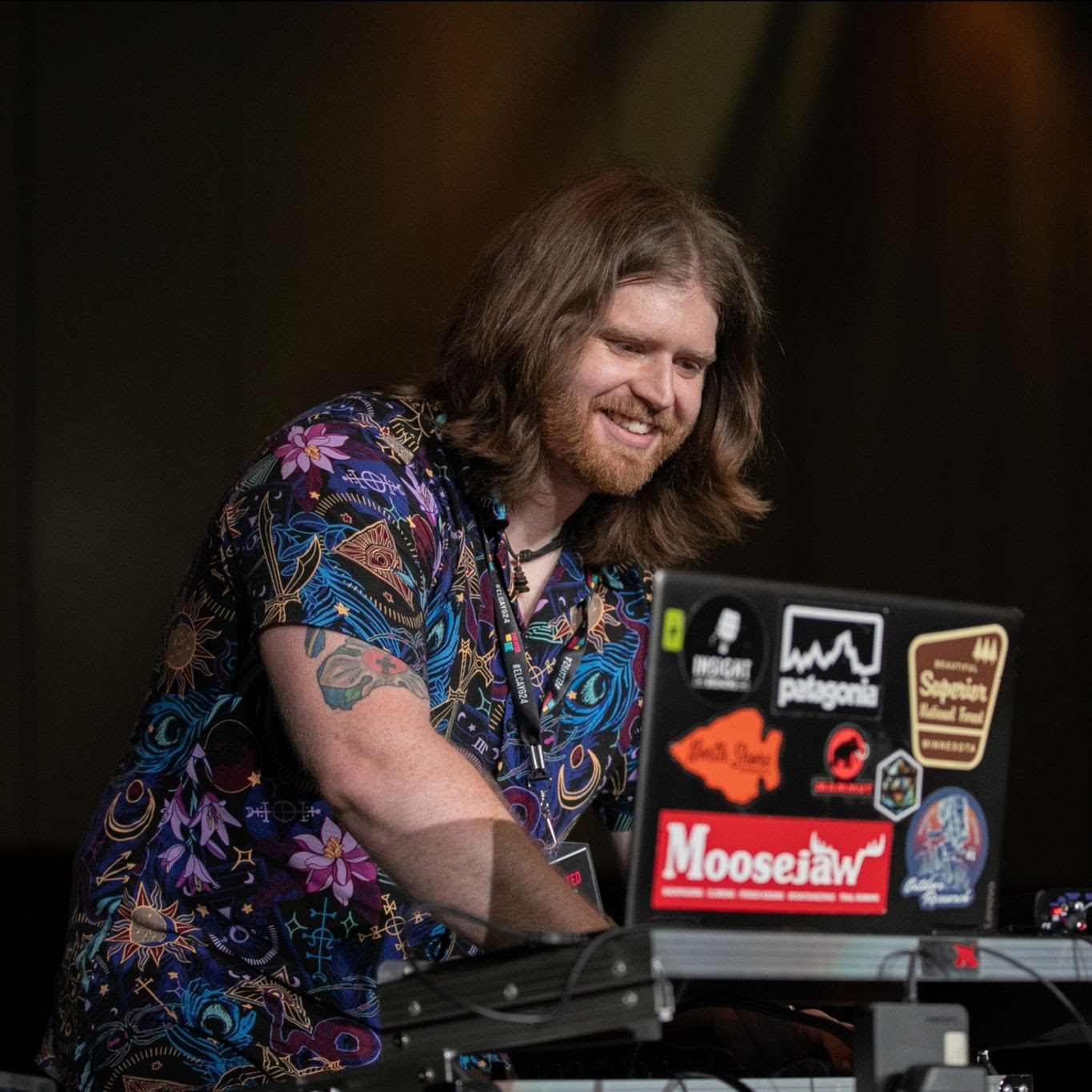 Author Bio: Tom Gehring (He/They) is a pastor currently working as a chaplain in Metro Chicago providing spiritual care for individuals living with, or at risk for HIV. In their free time Tom loves to DJ, spend time outside, play lots of games (both video and board), read excessively thick fantasy novels, and work out with his lovely gym community. Tom has been serving as a member of ELM’s board of directors since October of ’23 and is honored to be a part of this ministry.