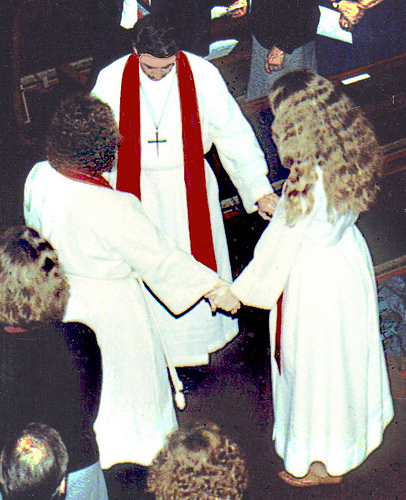
There is a moment that I imagine sometimes, that I think is coming soon.
It’s that part of an ordination service when all the clergy gather around their new colleague, the bright colors of their stoles standing out against the white of their robes, their feet shuffling to make space for everyone, and they lay hands on the shoulders of the newest pastor in the ELCA. I imagine feeling the weight of so many hands, the energy moving from the fingertips that cannot reach me, that grasp for the backs and arms of people closer by. I imagine that if these hands surround me and hold me and build a safe place of support, I will be, just in that moment, invincible.
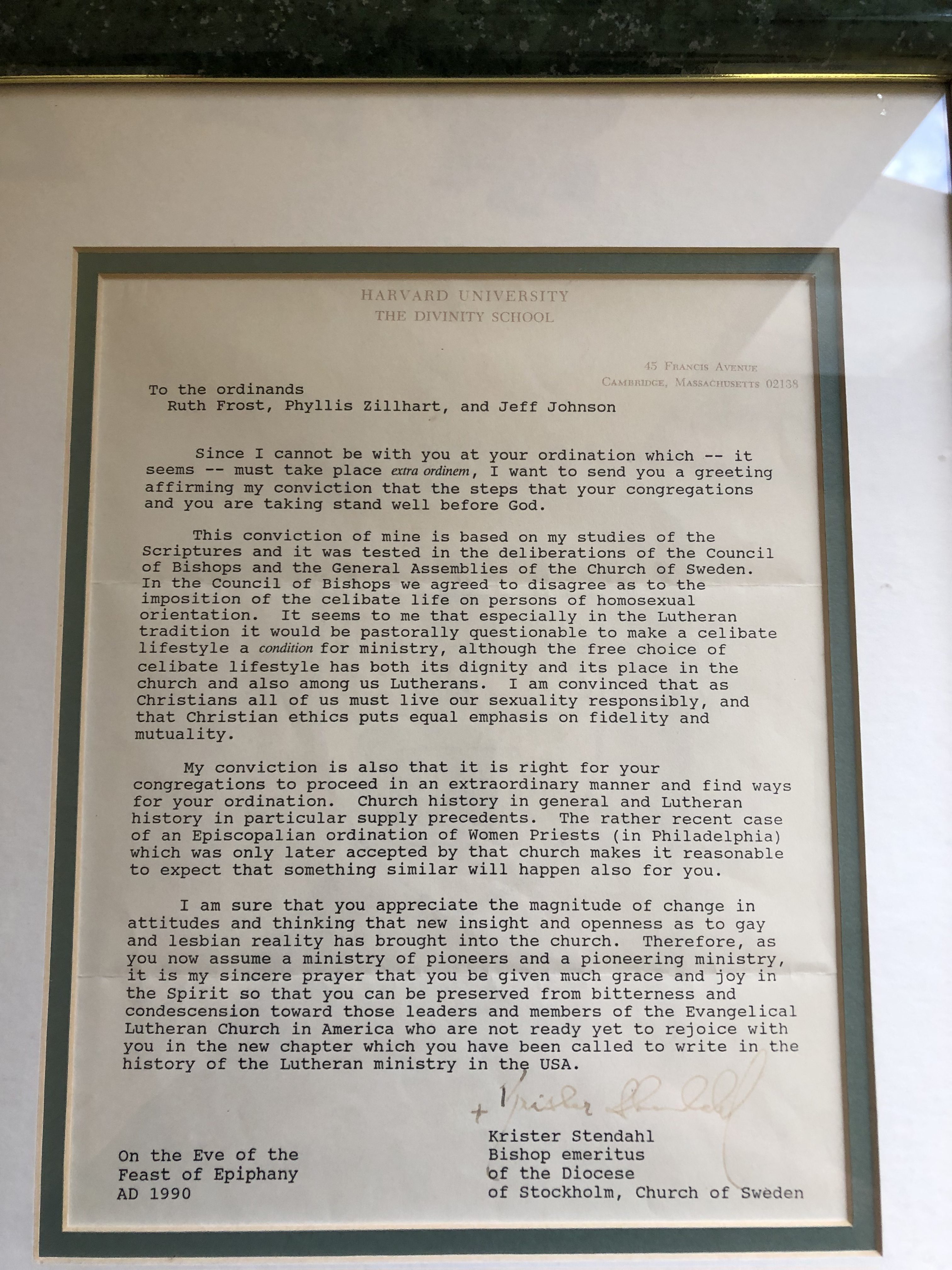
When Phyllis Zillhart, Jeff Johnson and Ruth Frost were ordained in San Francisco in 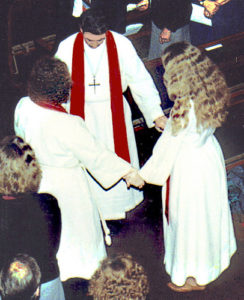 1990, they walked from the altar to the center of the sanctuary and held hands, just the three of them. Around them, the people—not just the ones in the stoles and robes—were invited to gather. They got close. They laid hands on one another. I wasn’t even born yet, and I know that the Holy Spirit was present. Watching the footage now fills me with a funny mix of awe and sadness.
I am in awe of thirty years of extraordinary ordinations, and in awe of the fact that because of this history, my ordination might be among the ones of the next thirty years. I am in awe of the members of Proclaim that I encounter every week in the course of parish work and in our online community, and I’m even in awe that I’m writing this reflection at all. So much progress has been made and so many LGBTQIA+ people have served God’s church with creativity, resilience, grace, and strength.
But at the same time, my awe is tinged with sadness when I imagine the world that Ruth, Phyllis, and Jeff faced in the days, months, and years that followed their ordination. I know things are different now, but I still feel the sting of microaggressions, offhand comments, or whispered rumors in the communities I serve. Stories about conversion therapy and high rates of mental illness among LGBTQIA+ youth break my heart. News bulletins about another trans woman of color lost to senseless violence makes me feel desperately lost. Our community is resilient, but we are not without our battle scars.
One evening, I drove another Proclaim member home after we’d been at a synod event, and our conversation turned to this old, tired struggle. She was angry; I just sighed because it had been a long day. As she swung my car door open, we reminded each other: “I’m proud of you. You are fierce and powerful and you’re called to this work. I’ve got your back, no matter what happens.”
There is a moment I imagine sometimes, where Ruth and Phyllis and Jeff and all the extraordinarily ordained said these things to one another. We build each other up and call each other to shine. For a moment, we make each other invincible. We’ve done it for more than thirty years, and we’ll keep doing it far beyond thirty more.
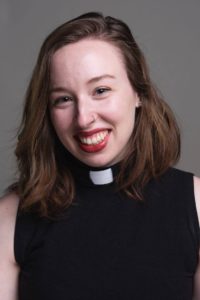 Cassie Hartnett (she/her/hers) grew up on the Connecticut shoreline and graduated from Union Theological Seminary in May 2019, where she studied psychology and religion, and wrote a new play for her thesis project. Previously, she studied at Barnard College and spent two years in the Twin Cities serving with the Lutheran Volunteer Corps, including work with ReconcilingWorks. In August, Cassie began her internship year at St. John’s Lutheran Church in Parkville, MD. In her spare time, she practices ballet and yoga, bakes excellent cookies, and can recommend a great queer young adult novel.”
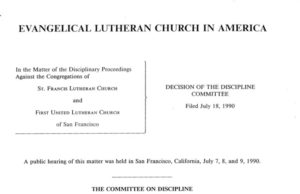 These two congregations were tried, suspended, and expelled from the ELCA. (Click link to read the full decision) Although it took ten years for the next one, fifteen other extraordinary ordinations occurred between 2000 and 2009. Two extraordinarily ordained pastors also received second calls. These calls and ordinations all happened because congregations (21 in all in the Evangelical Lutheran Church in America and the Evangelical Lutheran Church in Canada) were willing to risk discipline in order to call a candidate that they believed would best lead and serve their ministry. Some of them were disciplined, but all remained in the ELCA or ELCiC.
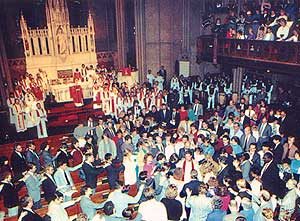 More than a few of those present for ordination in January, 1990 encouraged their home congregations to consider a more inclusive process for calling pastors. Some put their efforts into the newly-formed Lutheran Lesbian and Gay Ministries (LLGM), supporting ministries and congregations at risk by virtue of the ELCA policy of exclusion. Others established the Extraordinary Candidacy Project to certify qualified candidates for ministry excluded by ELCA’s requirement of celibacy for sexual minority pastors. Even others connected with Lutherans Concerned/North America (LC/NA, now Reconciling Works) or Wingspan or Soulforce or Goodsoil to work for policy change.
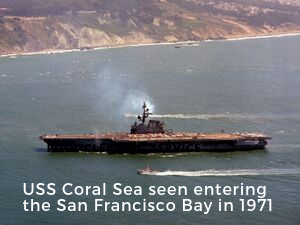 Berkeley, where I serve as pastor, declared itself to be a “sanctuary” during the Vietnam War for conscientious objector sailors on board the USS Coral Sea aircraft carrier anchored in the San Francisco Bay. The following month, the City Council of Berkeley took action and declared Berkeley to be a “sanctuary” for these sailors, becoming the first municipality in the country to identify itself in this way.
 against asylum-seeking refugees was to declare the whole church to be in solidarity as a “sanctuary denomination.” Once again, there are no rules permitting such solidarity; indeed, there are federal laws against aiding and assisting undocumented migrants. But our church found the courage it needed to stand in solidary from a deeply held, faith-rooted vision for an alternative way of living together in the world that values conscience, dignity, and basic human rights; a way we see reflected in Gospel.