
By: Anders Nelson
Fire doesn’t mix well with most things, nor does fire do well at listening to those who attempt to control it. It consumes, it harms, it destroys.
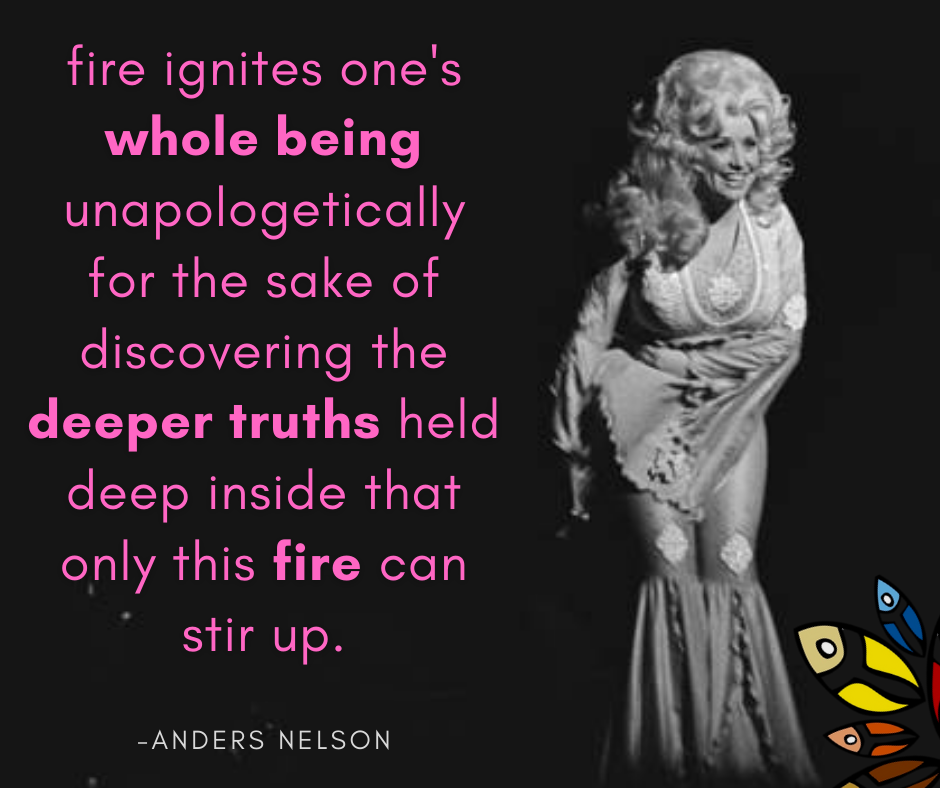
Yet Dolly Parton knows what it means to feel fire inside you and relish every moment of it.
For her, fire is not so much a force of destruction but the spark of beauty, the ignition of love, a burning sign of vibrant truth and deep joy. This fire ignites one’s whole being unapologetically for the sake of discovering the deeper truths held deep inside that only this fire can stir up. In a very similar way, the Holy Spirit (in all of her mysterious ways) inspires and ignites us individually and as the whole church to do the work of seeking beauty, love, truth, and joy in ourselves, each other, and our Creator. But despite the hard work of the Spirit, we might find ourselves attempting to put out these fires.
Growing up, wrestling with my queer identity felt like trying to hide a bonfire in the middle of a room full of my family and friends: nobody was willing to call it out and eventually I reached a point where I couldn’t sit there looking at it without saying something. “Hey! Have you all seen this? This is real and this is good. Okay? Okay.”
There’s liberation in seeing those flames as wholly good and not out to burn our lives to the ground. In fact, they might just inspire us towards burning down the things in our lives and our world that need to be burned down. Such discernment and reflection is necessary for the sake of the life of the church alongside the work of queer liberation. And if nothing else, this fire might inspire us to put on some drag, dance in our seminary’s chapel, and truly show the world what it’s all about.
This red hot emotion

Puts fireworks in motion

It looks like the 4th of July

There's no use in fighting

This fire you've ignited

Just stand back and watch the sparks fly
As the season of Pentecost approaches, may the revelatory sparks fly for you as they have for me. May the movement of Deep Wisdom stir up in you some meaningful, revelatory moments. And above all, may the flaming Spirit be with us until we’re all shouting, “Baby, I’m Burnin’!”
 Anders Nelson (he/him) is the associate pastor at St. Paul Lutheran Church in Wheaton, Illinois where he’s been serving since the very beginning of the pandemic. He’s subsisted the last year mainly on learning how tasty vegetarian cooking can be, singing hymns and broadway numbers in the shower, and scheduling as many Dungeons and Dragons sessions as possible.

 Lewis Eggleston (he/him)
 Andrew Tobias Nelson (he/they) is a transmasculine, bi-vocational, spiritually curious minister living in Upstate NY with over 100 houseplants and their fiance, who is a druid in the local pagan community and a really good cook. Always on the lookout for sci-fi and fantasy novels by more diverse authors, trying to stay socially aware without getting overwhelmed. When it’s not covid times, Andrew sings with the Albany Gay Men’s Chorus and seeks out new trails for running in the capital district.
 Since a young age, I struggled with the gendered expectations placed on me – girly, delicate, demure. Even now, the femininity expected of me feels like a pair of pants three sizes too small. Perhaps this is why I have always struggled with disordered eating – I have always strived for something not quite right for my body. At every turn, whether it was because my body did not fit the androgynous cut of clothing I wanted, or because peace with my body at any size has proven elusive, my body has felt less like home and more like exile. And I know I’m not alone – queer people suffer from disordered eating at higher rates than our straight peers.
 Robin Lovett-Owen (she/her) is the intern at St. Paul’s Lutheran Church in Waukegan, Illinois and is eagerly awaiting first call. She is also an artist who makes queer Christian art, and her work can be found on Facebook, Instagram, and Etsy @3Solas. If she’s not in the studio or at church, she can be found hiking with her spouse, Lee, and dog, Sophie.


 Queer theology is to me this wonderful irrationality, the dramatic paradox of a God who comes to us as a human—and who lives and dies with us, and then lives again. A human who delights breaking the rules other humans had made to hang on to control, can set us free from the things we fear the most. We, who have been told so many times and so many ways that we are not as God intended, and yet know the deeper truth that we are indeed precisely who God made us to be, and for whom Jesus lived and died and rose again—we know what it means to have a Savior who “queers” everything—even death and life. And we can wear the loudest plaid we want, and wear the frilliest and sparkliest hat, and shout for joy to the God who loves us so extravagantly, wildly—and queerly!
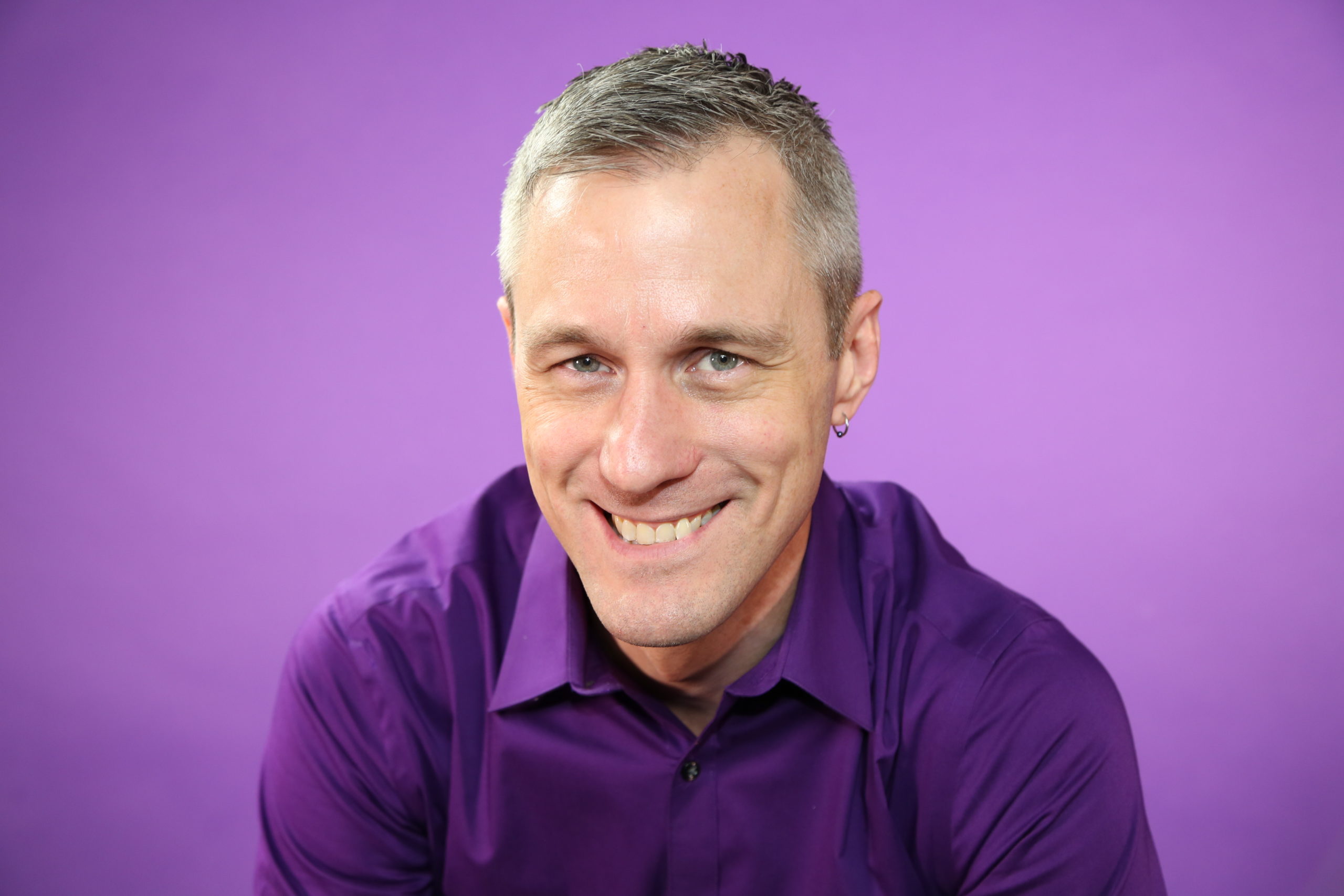
 Guy Erwin (he/him) is the president of United Lutheran Seminary in Pennsylvania, and in 2013 was elected as the first out gay bishop in the ELCA and the first gay male bishop in any Lutheran church. He dresses very soberly, but loves bright vestments, his husband, his parrot, and Easter.
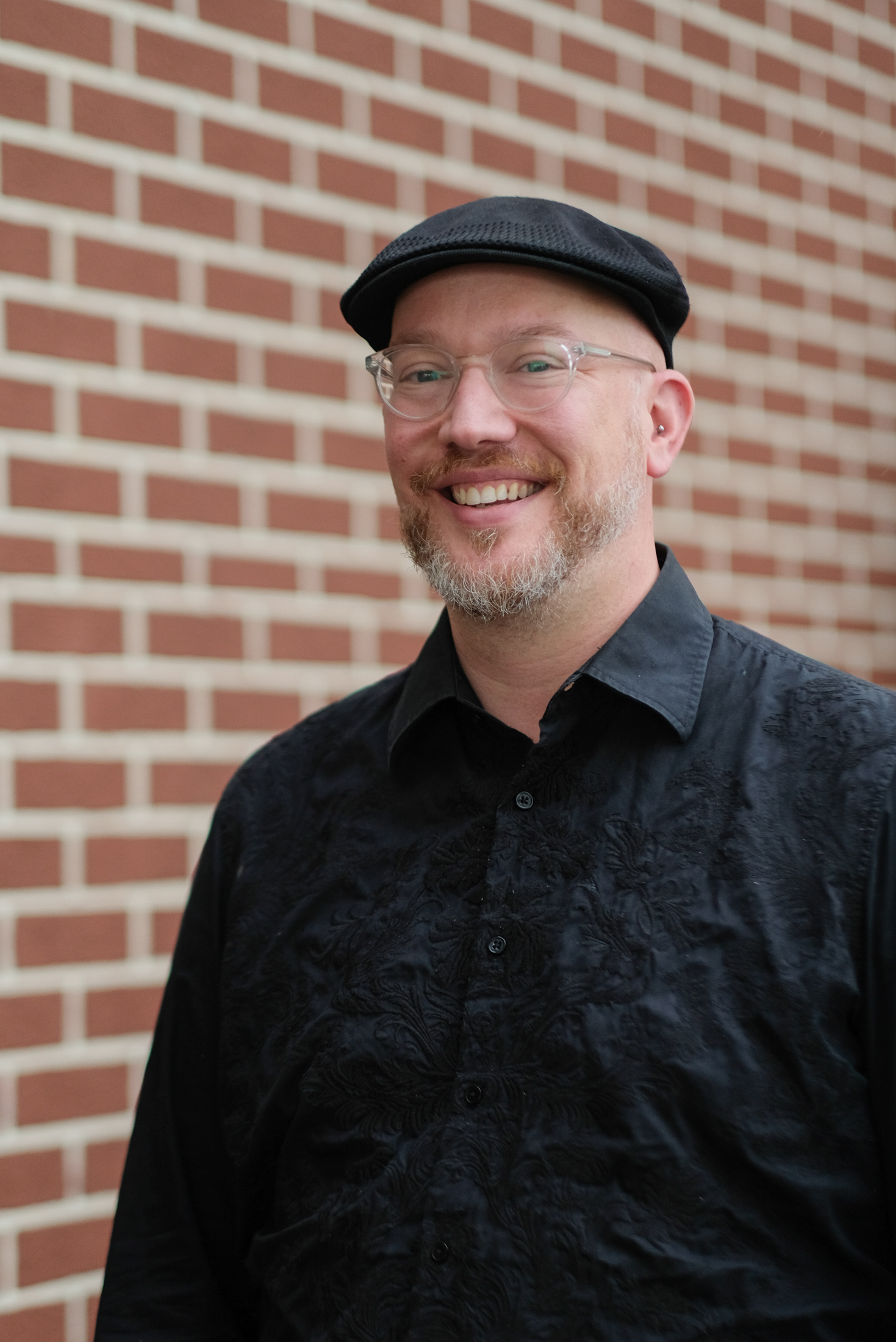
 The Rev. Laura Kuntz (she/her/hers) is serving as interim pastor and lives in Cleveland, Ohio with her wife and two dogs. Something that brings her joy is being a part of the Buy Nothing Project in her neighborhood, where people give to their neighbors out of their abundance. Her favorite items she has received were a small Ikea greenhouse and a box of old trophies she used to make a hat hanger for a friend. She loves to give away plants and anything that someone has a need for.